Sunday, January 17, 2016

Chocolate Coffee Porter


This beer had been on my mind for a long time. Having had a delicious coffee porter at Cycle Brewing earlier this year and of course Founders breakfast stout, I knew I needed to make one myself. I threw a recipe together one night after work, but was concerned that the pale chocolate malt I had was too old to use. It will be two years old in June. That necessitated a few quick tests. I steeped the grains in hot water and tasted it. It seemed ok so I went with it.

The beer fermented quickly, but I was not able to package it since all of my kegs were full. After nearly four weeks, though, on January 4, I had an empty keg and it was ready to keg. I ground five ounces of Heroes Coffee espresso. I added that along with five ounces Askinosie cacao nibs to a paint bag. Incidentally, it had a few small holes. I also used three stainless steel spoons to weight it down. After siphoning the beer to the keg, I placed the bag in the beer. It floated. I had to remove it, open the bag, and add more spoons. Six were enough to make it sink.


From there, I waited. Of course, curiosity got the better of me the next day and the following days. I had to try it. Very coffee forward. No chocolate. A touch sweet and viscous. Cloudy, with bits of ground coffee. And flat. I waited some more, hoping it would carbonate quickly. Eventually I turned the gas to 30 psi and it was still not carbonating. But I left the gas on.

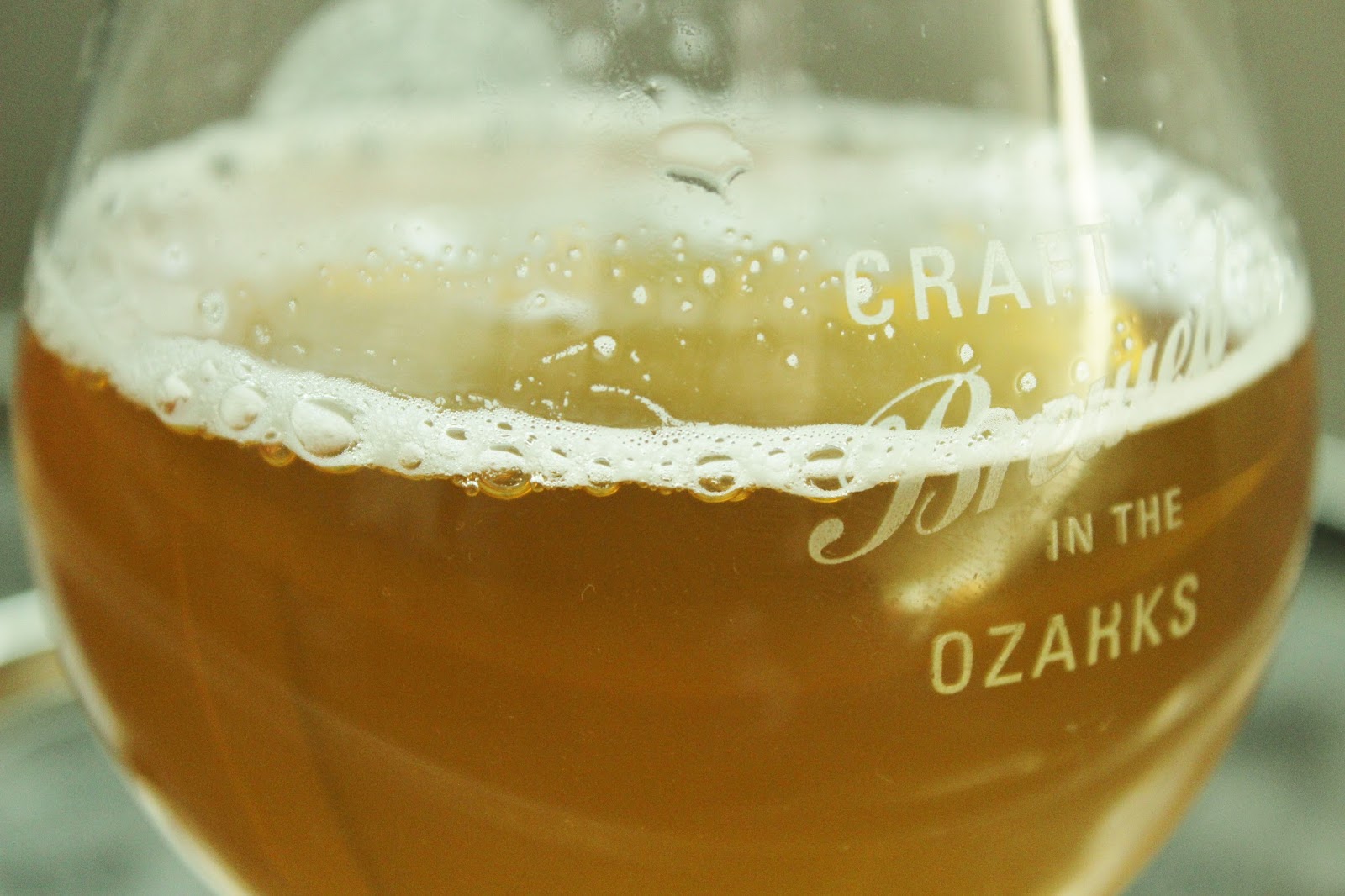
Finally, on Friday, the carbonation was at a drinkable level. Somehow, however, the beer quickly switched from flat to overcarbonated. I turned the gas all the way off in hopes that it would settle down, but it's still really foamy. The coffee seems to have faded slightly, it tastes drier, and the chocolate seems to be more pronounced. It's not too dry, however. And roasty.


If I made this beer again, I might try adding more coffee. I also wouldn't grind it as much. Too much grinding made the coffee very fine, allowing it to escape through the paint bag's tiny mesh holes. I'd also make sure I was using a paint bag with no holes. This leads to some small coffee particles ending up in the beer. Which, it occurs to me, may create nucleation points and hence a foamy beer.

Couldn't I just add the coffee and nibs to the fermenter? Sure. I like the keg method because I avoid the possibility of infection. I've taken to not opening the fermenter until I'm ready to keg the beer. I just wait two weeks and it's ready to go. I haven't had any issues with under attenuation. This all just makes me feel like there is a lot of room for innovation in homebrewing. Plastic fermenters, siphoning... There has to be a better way. And a better way to dry hop, too. For now I dry hop in the keg, which works well, but, again, there has to be a better way.

All that said, overall, this beer is pretty solid and measures up to what I had hoped for. With a few tweaks, it can be even better.

Final gravity: 1.018-20.

https://www.brewtoad.com/recipes/chocolate-coffee-porter-8a16e6

Update 1/18/16:

This beer definitely needs a few tweaks. Quite a few flecks of coffee bean continue to make it into the beer, distracting from an otherwise attractive appearance and probably contributing to a very foamy pour, and killing the head. Other than that, seems to taste pretty good.


Sunday, January 10, 2016

Tasting Experimental Grapefruit IPA

It's been winter for awhile, but hasn't felt like it. So I feared that my plan to put a few kegs out in my garage was a failure, all for naught. But January came and we're finally starting to see some cooler temperatures, including a few flurries yesterday and today.

I brewed this beer in mid November and kegged it three or four weeks ago. It's taken awhile to get carbonated. I have three other kegs to drink from, though, so I wasn't in a rush to get to it. It's finally in a drinkable state, and has cleared up nicely.

I've been brewing over two years, and have made something like 40 batches. So I feel like my technique is, while not perfect, fairly solid. I brew good beers without off flavors. So the only thing I can attribute this beer's odd flavor to is the hops. It's sort of skunky. I never left the beer in sunlight. It's in a dark keg. I cover my fermenters with towels to block out light. But it's reminiscent of skunk; it doesn't taste solely of skunk. Maybe that's just how this hop is. Sort of like equinox hops, which some describe as tasting like green pepper. I expected this to be like grapefruit, but instead it's fruity with a hint of skunkiness. At the same time, it's a unique flavor, sort of like the equinox hop, and it's enjoyable. I still have some of these hops left, but not enough to brew a full batch.

Update 1/18/16:

It was 9 degrees this morning. A thought in my head: what if the kegs in the garage froze? Or at least the beer in the beer lines? I checked everything later. Pushed on the beer lines. Still liquid. Moved the kegs around, felt beer swishing inside. Safe.

Poured some of this beer. Still clear, despite likely stirring up some yeast. Let it sit for awhile. Came back. Pleasant, fruity aroma. Taste is still of something in the realm of skunk, but not all the way there. I think it's onion. Despite all of the seemingly negative things I've written above, this is actually a pretty good-tasting beer.


Tuesday, December 8, 2015

100% Vic Secret IPA

These single hop beers are really informative. You can really find out what a hop tastes like. So it is with this beer. To me, it tastes a lot like galaxy, which makes sense as they are both Australian. But it's not exact. There's a certain piney, pineapple flavor in vic secret that's not in galaxy. And of course generic fruit.

The beer is a bit sweet, but I haven't drawn much from the keg, so early samples from any keg tend to be sweet, regardless of the beer. If it's like the galaxy beer, it'll taste more dry as I drink more of it.

It's opaque. More orange than the galaxy ipa, probably due to the two pounds of munich.

This is my first kegged beer that hasn't been in my kegerator, which has two kegs in it already and can only fit two. So this one has been hanging out in a spare room at room temperature. Temperatures in drafty house dip at times, though, so it's still pleasant to drink. In the coming weeks, I'll fill my fourth and final keg with either the experimental grapefruit ipa or coffee grinder ipa. And then it will be time to brew again.

Chocolate Coffee Porter brew day and keg day

I don't often brew on week nights. My brew days usually take about 5-6 hours from start to clean-up. Usually after work, I'm too tired to start a new beer. But I have an empty keg and two fully fermented beers (each brewed over three weeks ago). And the longer I let them sit unpackaged, the greater the risk of infection, oxidation, and faded hops. So it was time to keg those. I've been thinking about a porter lately, and I wanted to use the London Ale III yeast at least one more time. It leaves a relatively high final gravity, which I think would be great for a porter.

Back in the summer, I went to Anna Maria Island, and I drank a ton of beer. I made several trips to ABC and Total Wine to buy things I can't get in Missouri. On the final day, I made a trip to Tampa and St. Petersburg. I visited Cigar City and Green Bench, both excellent breweries. The last stop was Cycle. I had read about it in a beer advocate review of yet another Florida beer. The review mentioned Cycle's Fixie IPA. So I went there with the aim of trying that. I did. It was underwhelming. But Crank was amazing, and so was Cream and Sugar Please Porter.

So the goal tonight is to brew a porter that is in the ball park of Cycle's. To achieve the chocolate and coffee flavors, I'll add those directly to the keg. As for creamy sweetness? I don't have lactose on hand, but I suppose I can try that next time.

Troublesome brew day. First, I thought I had chocolate malt, but only had pale chocolate. It's crushed and about a year and a half old. Not much aroma. As a result, I was unsure about using it. So I heated some water in the microwave and steeped a bit of grain and tasted and smelled it. I was still uncertain about the taste, but went for it. The first runnings tasted fine, though.

Then I encountered a propane problem. I've had a persistent issue with too much volume post-boil, which I attribute to a less-than-vigorous boil. I lit the burner, but it wouldn't light. Instead, there was just a flame under wherever I held the match. So I exchanged the tank, which wasn't completely empty, thinking the problem was the propane tank. I brought the new one home and had the same issue. Meanwhile, it was getting late. I consulted the internet. I attempted to clean the burner. Still didn't work. Eventually the entire ring would light, but would go out if I turned up the gas all the way. Finally, I just placed the kettle on the burner, thinking I'd at least take advantage of whatever amount of heat the burner was able to produce. Just to make sure, I turned up the gas. The flame didn't go out. Problem solved, I guess?

Next problem: a keg I've never used before. I sanitized it. Then hooked up the CO2. Started leaking around the o-rings. I adjusted the o-ring and applied some vegetable oil. That seemed to work. No leaks.

I ran into one last problem. My wort chiller sprung a leak where the vinyl tubing meets the copper. Thankfully I noticed this right after I began chilling the wort. It was a pretty severe leak, and would have ruined the beer. I tightened the hose clamp and it was fine after that.

6.5 hour brew day in total, with a lot of hiccups in between. OG is 1.068, which is well above what brewtoad anticipated. Perhaps due to an extended mash? It was over an hour. Probably an hour and 15 minutes.  Sampled the chilled wort: roasty, dark fruit, raisin. Maybe because it's so sweet? Maybe the chocolate will be more apparent post fermentation?My volume was right around five gallons. I saved a small jar of 1318 yeast, but racked this beer on the rest of the yeast cake from the coffee grinder ipa.

Which I kegged while chilling the porter. I dry hopped it with three ounces Willamette, one ounce galaxy, and one ounce citra. It was very clear going into the keg. I did siphon up some of the yeast cake unfortunately. Gave it a taste. Good solid hoppy flavor. Galaxy and Citra is a good combination. I think the Willamette got lost in the mix, though. I used three ounces of it and one each of the other two for dry hopping, so hopefully it comes through. FG for this beer was around 1.010-1.012.

In other news, I received my Cyber Monday shipment from Yakima Valley Hops. Eight ounces each of the following:
  • Citra
  • Centennial
  • Galaxy
  • Golden 007
  • Equinox
  • El Dorado
  • Nelson Sauvin
  • Azacca

Sunday, November 22, 2015

All Citra pale ale

Dry as a bone. That's what comes to mind when I taste this beer. Even though I undershot the target gravity by only three points and despite a final gravity of 1.010. But yet a beer like this demonstrates what can happen when a less-than-vigorous boil leaves you with too much volume. And what's what happened here. I had too much wort by about half a gallon. I think if I'd reached my target volume, I of course would have had a higher original gravity, which would have led to a higher final gravity, and thus a slightly sweeter beer. This beer needs some sweetness to balance out the bitterness and hops.

This isn't an extremely hoppy beer though. It doesn't pop, at least not like some of the other hoppy beers I've made his year. I wonder if it might have some more zing if it were sweeter.

It has pretty good aroma -- fruit, citrus -- but the flavor doesn't quite follow. Flavor is where that lack of zing is especially apparent. Maybe due to the older hops that made up half of the boil hop bill? Maybe due to some oxidation that I'm not aware of? I never opened the fermenter between brew day and keg day, so I'm not exactly sure where that would occur.

Clarity is quite low, but not as low as the london ale iii beers. The oats might be imparting the haziness, or maybe these early pours are just picking up some yeast at the bottom of the keg.

All in all, not a bad beer. I certainly don't have a problem drinking it. But I can definitely find room for improvement. Beers like this kind of highlight the downfall of being the creator and drinker. For a person unfamiliar with what I had in mind for the finished product, it's probably really enjoyable, and they can just enjoy it for what it is. For me, however, my enjoyment is tempered by knowledge of what it isn't. Maybe I just need to let go of those thoughts.

https://www.brewtoad.com/recipes/citra-pale-ale-21cfad

Update 12/8/15:

This beer is a little sweeter than I originally thought, or at least compared to All day IPA. I had that last night, followed by this citra pale ale, and the citra beer seemed much maltier in comparison. Additionally, the taste is more like raw hops, rather than the typical mellow, nuanced flavors and aromas I get from hops that have interacted with yeast or served as dry hops. I'm not particularly fond of that raw hop flavor.

Saturday, November 21, 2015

Experimental grapefruit IPA brew day


11/14/15:

It was well past time to keg an all-citra IPA that I brewed on October 25, so I decided I'd keg and brew on the same day. These days are really tiring. There's little down time, since I'm constantly working on something, whether it's cleaning, adding hops, chilling the beer, or kegging.

First, I went to walmart and got a package of flaked oats. Adding these to IPAs and pale ales seems to be all the rage these days. Then it was on to coming up with a recipe. I knew for sure I was using 100% experimental grapefruit, which seems to be a variety only available through Yakima Valley Hops. I thought I'd use 12 lbs of grain, because I was aiming for more body and higher alcohol, so I calculated the water I'd need for that, but thought better of it once Brewtoad told me I'd be in the 8% ABV range. I wasn't sure I wanted an 8% beer with hops I'd never tried before. So I reduced the grain bill to 11 lbs, but failed to account for that when I measured out my water.

By the point I changed my mind on the amount of grain, my mash water was heating. I figured I'd just reduce the sparge water, but I guess I forgot. In the end, I had about six gallons of wort that was well under the calculated OG, which was 1.063. Instead, it was around 1.054-56. I ended up dumping half a gallon of wort. And because the wort nearly filled the fermenter to the neck, once fermentation began, krausen began seeping through the airlock. So I had to go to Lowe's and buy tubing for a blow-off tube. By the morning, I had lost an additional half gallon or so to the blow off. So that was disappointing and added unnecessary stress. But it should be a good beer nonetheless.


I continue to drink the galaxy ipa, which tastes great, but continues to be flat, despite two weeks on the gas, and cloudy. I've just had samples here and there, so maybe I haven't drawn off enough to clear it up. Yet it's still curious to think that this beer was quite clear in the fermenter and now is murky and frankly not all that appealing to look at.

Vic Secret IPA kegging and coffee grinder ipa brew day


11/15/15:

Vic secret ipa:
Brewed 11/1
Kegged 11/15

OG 1.062
FG 1.018

I opened the vic secret fermenter for the first time today, in the hopes that leaving the beer alone until kegging day will reduce exposure to oxygen and wild yeast or bacteria. I checked the gravity and tasted the beer. Golden, good clarity. Kind of a tartness, lemony. Slightly viscous, either from the relatively high final gravity or from the pound and a half of flaked oats, or both.

As for brew day, I bought a 55 lb sack of unmilled German pale ale (avangard) the other day, for $46. I don't own a mill, but figured it might be fun to play around with nonetheless. So I set to work on grinding -- grinding, not crushing -- the grain. I might have just created flour, at least initially. But toward the end, the resulting crushed/ground grain was looking much more usable. The lesson here? I'm not sure the extra time spent weighing and crushing grain is worth a few dollars saved per batch. And I'm using a coffee grinder, which really increases the amount of time necessary to crush the grain. Could I do better with an actual grain crusher, both in the quality of the crush and the amount of time spent? Maybe. But then I'd have to spend a decent amount of money on a crusher, and I may not save any time or that much money, if I then have to also purchase a drill.


The other thing that remains to be seen is how this mash will lauter. I added five pounds of grain that I crushed, along with five pounds that the homebrew shop crushed. If it's a really sticky, slow lauter, then I'll know why. But it also has a pound of ground flaked oats, so it might be hard to say for sure. The mash did not clog, thankfully, but the lauter was very slow. Another trade-off to add to the list of issues with crushing my own grains. Or maybe it was just the pound of oats?

Coffee Grinder IPA came in at 1.054. Anticipated OG was 1.065. But final volume was at least 5.5 gallons, maybe even 5.75. Toward the end, the boil became much less vigorous; I think because the propane is getting low. Either way, the OG is still disappointing, as I'm looking to drink some higher alcohol beers, but I keep brewing thinner beers. In the end, it will still be beer though, and I'm sure it will taste just fine.

Coffee Grinder is a blend of citra and galaxy. And Willamette. I'm not a huge fan of noble-like hops, but they're so mellow that they'll probably be overtaken by the more aromatic citra and galaxy. But that's ok. Hopefully they'll add something. I needed to use them. They'd been in my freezer for about a year, and since this has been the year of brewing IPAs -- and not a more hop-neutral style -- they've remained unused.

On another note, these brew-and-keg days really leave my kitchen a mess, and me feeling tired. On yet another note, pitching onto a previous beer's yeast cake is an extremely effective way to produce a quick, strong fermentation. The airlock was already bubbling away a mere twenty minutes after racking the wort onto the vic secret ipa's yeast cake.

100% Galaxy IPA

This beer is finally carbonated after three weeks in the keg. [Note to self: try setting the gas at 30 psi for a day or two]. Despite going into the keg relatively clear, it's coming out opaque, presumably because it's been in contact with dry hops ever since I kegged it. And that's after several pours, probably at least a gallon so far.

Finish is somewhat dry, which is puzzling, since the early, flat samples I had were sweet, nearly to the point of cloying, and because the beer finished at around 1.014. However, it might just be carbonation, bitterness, and hop matter that leads to the perception of dryness.

I'm ok with some haze, but this beer is straight up cloudy, and I'd appreciate some more clarity.

Taste is ... galaxy hops? Fruity. I can't think of any flavor descriptors analogous to this hop except fruit. A family member tried a (flat) sample last weekend and immediately said "grapefruit." This recipe has seven ounces of galaxy hops. It's not extremely hoppy though. If I brewed it again, I might reduce the boil hops to three, put them later in the boil, and increase the dry hops to four ounces. Or maybe just increase the total to eight or nine ounces. This beer is not especially bitter, but it's apparent.

Overall, I'd say this recipe is successful. I set out to brew a northeast style ipa, but not actually having had any of those beers, I can't say I achieved my goal of emulating that style. As a stand-alone beer, though, I think it works.

https://www.brewtoad.com/recipes/galaxy-ipa-5666eb

Update 11/28/15:

The more I drink this, the clearer it gets, and the sweeter it becomes, too. I think the beers drawn from the keg early on contained more hop particulate, which led to increased perception of dryness. But now, as the beer has been in the keg for about four weeks, it is really hitting its stride. The hops are balanced by silky maltiness. It's cleared up, has great aroma and punchy hop flavor, and its golden appearance almost glows. The murky opacity has dwindled to a translucent haze. It's a really pretty beer.

12/8/15:

This is a fantastic beer. I wish I had the means to can it, because I'd do that so I could keep it around longer. Instead, I'm drinking it as quickly as possible to make room for other beers, as all four of my kegs are in use and I have a newly brewed beer and a completed beer (experimental grapefruit) ready to be kegged. I guess I'll just have to re-brew it at some point.

Wednesday, November 4, 2015

London Ale III 100% Galaxy IPA initial samples


I usually can't resist pulling a few samples from the keg well before the beer is carbonated, and I especially couldn't wait this time since this was my first time using London Ale III and galaxy hops. While this beer was pretty clear going into the keg, it's now obviously quite milky. Yeast or hop matter/oils in suspension? Chill haze? All three? London Ale III has a reputation for producing cloudy beer (notwithstanding Wyeast's spec sheet stating to the contrary), and I suppose the sample I tasted on Sunday, directly from the fermenter and before the dry hops touched the beer, had a touch of haze. But overall it was pretty clear. I expect this beer to clear up over the next few weeks.

So are these cloudy northeast IPAs permanently cloudy? Or are they just young beers? For example, even heady topper, evidently, clears up over time, as shown in this video. It seems to be all the rage among homebrewers to brew cloudy IPAs. There's a lot of speculation about the cause: Water profile? Flaked adjuncts? Flour? Yeast? Hops? Maybe the commercial examples just haven't sat around long enough to clear up.

Taste is fruit. Generic fruit. Like many other hoppy beers I've brewed this year, at least when I've tasted flat beer. Super sweet, although the pre-dryhopped beer was relatively dry. I think that's just a matter of perception. The intense hoppiness in these early pours creates a sense of sweetness that isn't really there. This beer should come together in the next week or so, once more of the cloudy beer at the bottom is drawn off and carbonation increases. And the remaining hops will round out and meld with the beer.

Sunday, November 1, 2015

Vic Secret IPA Brew Day and Keg Day


Fantastic, beautiful day. Sunny, a slight chill in the air. The sun sits slightly different in the sky relative to the time, since we switched back to standard time. Great day for brewing.

This is another experimental beer. It has one pound of toasted oats. Toasted in the oven at 350 degrees for about 15 minutes, and 300 for 30 more. The oats took on a slightly more golden, amber appearance and a toasty, perhaps acrid aroma. That acridness seemed to dissipate as they cooled. I've read that they're supposed to rest for a few days before using, but other folks claim they've had no problem tossing them in the mash right away, so that's what I did. To add to the experimentation, I'll be using Vic Secret hops for the first time. I'll round out the beer with 7.5 pounds Avangard german pale ale, a half pound of non-toasted oats, and two pounds of Munich. This beer will be fermented with the same yeast that I used to ferment the beer that will be kegged today.

That beer is my first northeast-style IPA. I just checked the gravity for the first time and tasted it for the first time as well. It's a semi-smash beer with 100% galaxy hops, 91% 2-row, and 9% oats, fermented with Wyeast 1318 London Ale III. This is my first time using galaxy hops and first time using that yeast. The gravity sample was quite delicious. I've had issues lately with hoppy beers using US-05. Again, I question: is it the better bottle--some contaminant that I'm not able to kill? Old hops? Oxygen getting in somehow? The yeast (which was a fresh pack and which has never created issues in the past)? The galaxy beer, however, was fermented with a different yeast, fresh hops, and a different fermenter. And tastes and smells amazing. So much so that it brought a smile to my face. I can't wait to try it once it's carbonated and dry-hopped. OG was 1.060 and FG is 1.014, putting it at right around 6%. It definitely has a creamy, soft mouthfeel, but it's hard to say whether that's due to residual sweetness or the oats. It's very clear too, with just a touch of a mostly-transparent haziness.

It's interesting, too, to think about yeast and hop interaction. At some point during fermentation, the hop aroma transforms. The rawness mellows out, and no longer smells like a bag of hop pellets.

Vic Secret beer:

OG 1.062. Pitched yeast at around 73. Vigorous boil this time, so ended up with right at five gallons. Racked onto galaxy beer's yeast cake. I've found that oats make for a really thick, sticky mash, which really extends the brew day, since it takes so long to drain the mash tun. Did the toasted oats add much? The ones I chewed on didn't have an especially prominent flavor. But maybe it will be more apparent in the finished beer.


Saturday, October 31, 2015

Hoppy pale ale / ipa


This was an enlightening beer, in that it demonstrated what 'homebrew' can be. Homebrew is just beer, but it can be used pejoratively, but not this one. This one was fantastic, and really showed me what you can accomplish in this hobby.

I wasn't sure what to make of it when I brewed it. I used some crushed grains that were over a year old, but the hops were fresh. The resulting beer struck the perfect balance between sweet and dry, and made a solid foundation for fruity hops.

5 gallons

11 lbs pilsner (and maybe some munich - it was a mixed bag)
4 ounces crystal 60

0.33 oz Galena 60 min Boil
0.5 oz Mosaic 20 min
0.5 oz Equinox 15 min
0.5 oz Azacca 12 min
0.5 oz Azacca 7 min
0.5 oz El Dorado 6 min
0.5 oz El Dorado 1 min
0.5 oz Equinox 0 min
0.5 oz Mosaic 0 min

Dry hopped 7 days with
1 ounce equinox
1 ounce el dorado
1 ounce mosaic

US-05

Brewed 3-24-15
Kegged 4-7-15

https://www.brewtoad.com/recipes/hoppy-pale-ale-16